
Nofollow links are one of the most misunderstood parts of SEO. Some marketers believe they are useless, while others swear they can boost rankings, authority, and even traffic. With so many conflicting opinions, it’s no surprise that the question keeps coming up: Do nofollow links actually help SEO, or are they just dead weight in your backlink profile?
You’ve probably come across HTML attributes like link rel=”nofollow”, rel=”ugc”, or rel=”sponsored”, especially when checking your backlinks in tools like Ahrefs or Semrush. But what do these tags really mean? Do they stop Google from following your links? Do they prevent link equity from passing? And most importantly — do they influence your rankings in any meaningful way?
Here’s the truth:
Nofollow backlinks do affect SEO – just not in the traditional “link juice” way most people expect.
In this guide, you’ll discover:
- What nofollow links actually are (in simple terms anyone can understand)
- Google’s official stance vs real-world SEO experiments
- Whether nofollow vs dofollow still matters in 2026 and beyond
- Data-driven proof of how nofollow links impact crawling, indexing, and visibility
- When to use nofollow, UGC, and sponsored attributes correctly
- How to earn high-value nofollow backlinks that indirectly improve rankings
Let’s break it down step-by-step without the confusion.
Understanding The Concept behind Nofollow Backlinks
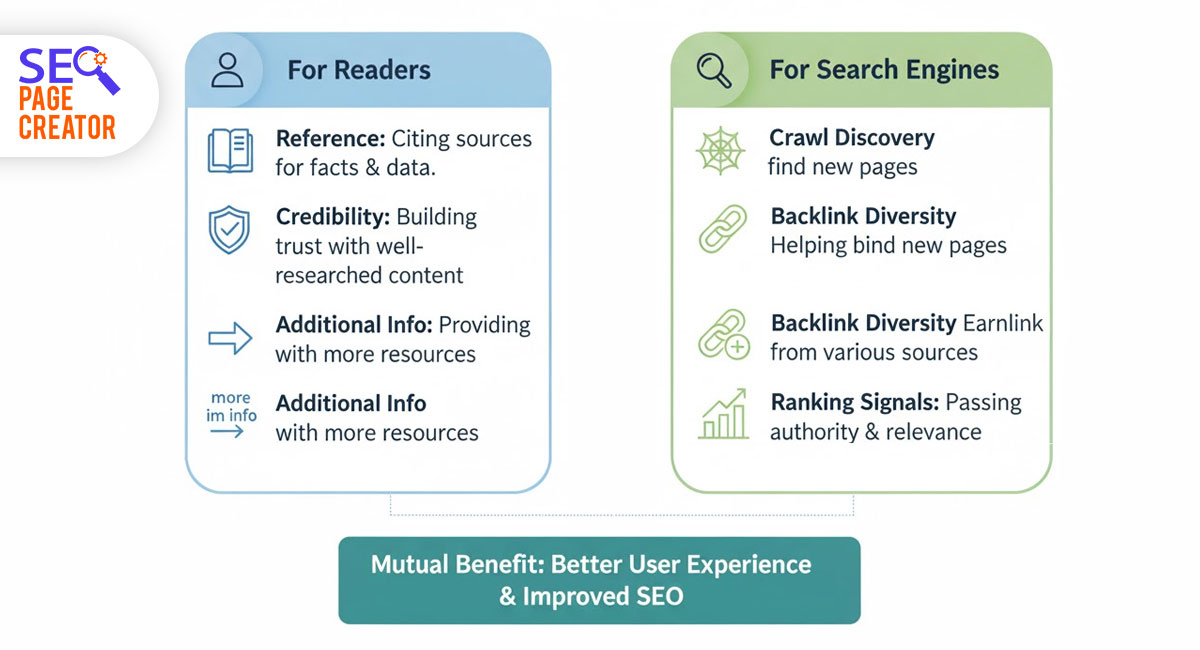
nofollow backlinks are more than just an HTML tag; it’s part of how content creators or SEO strategists communicate with search engines. Whenever an SEO writer links to another website in their content, there’s usually a clear intent behind it:
For Readers / People:
- To reference a source and give credit: Acknowledge where information, quotes, or statistics come from.
- To provide additional information for the reader: Direct users to guides, tutorials, or supporting content.
- To cite authority and strengthen credibility: Show that your content is well-researched and trustworthy.
- To share useful resources or tools: Recommend apps, software, or platforms relevant to the topic.
- To support an argument or claim: Back up statements with studies, data, or expert opinions.
For Search Engines / SEO:
- To help Google discover new content: Links serve as pathways for crawlers to find and index pages faster.
- To provide context and relevance: Outbound links to authoritative sites signal the topic and quality of your content.
- To build a natural backlink profile: A mix of dofollow, nofollow, and UGC links signals authenticity to search engines.
- To avoid penalties for unnatural linking: Using nofollow or sponsored tags appropriately shows Google you aren’t manipulating rankings.
- To boost content visibility indirectly: Nofollow links may generate referral traffic, brand mentions, or secondary backlinks, which can influence SEO over time.
However, not all external links are meant to pass SEO authority or “link juice.” That’s where the concept of dofollow vs nofollow links comes in:
- Dofollow links are standard links that tell search engines:
“This is a trusted reference, and I’m endorsing this site — pass some ranking authority here.” - Nofollow links, on the other hand, tell search engines:
“I’m linking to this site, but I don’t want to pass authority or influence rankings.”
The idea is simple: a writer might reference a site for its usefulness, but they don’t want to manipulate search rankings or appear to be “selling” links. This distinction is crucial for maintaining ethical linking practices and staying compliant with Google’s guidelines.
Why does this matter for SEO?
Even though nofollow links don’t pass PageRank directly, they still:
- Help Google discover new content
- Drive referral traffic and visibility
- Improve the credibility of your content by linking to authoritative sources
- Contribute to a natural, diverse backlink profile (which Google values)
In essence, nofollow links exist to balance content value with SEO integrity. They allow writers to share useful references without giving undue ranking credit, while still signaling trustworthiness to readers.
What Are Nofollow Links?
A nofollow link is a hyperlink that includes an HTML attribute telling search engines:
“Don’t pass PageRank or ranking authority through this link.”
Here’s a basic example of how it looks in HTML:
<a href=”https://example.com” rel=”nofollow”> Example </a>
The Birth of Nofollow Links
In the early 2000s, as blogs and forums exploded in popularity, website owners faced a growing problem: spammy links and manipulated search rankings. Comment sections were flooded with users posting links solely to gain SEO benefits, not to provide real value. At the same time, some websites openly sold links to boost their PageRank artificially.
Google noticed that these practices were harming the quality of search results. Their goal was to deliver relevant, trustworthy content to users, but spammy links threatened that.
Why Google Introduced rel=”nofollow”
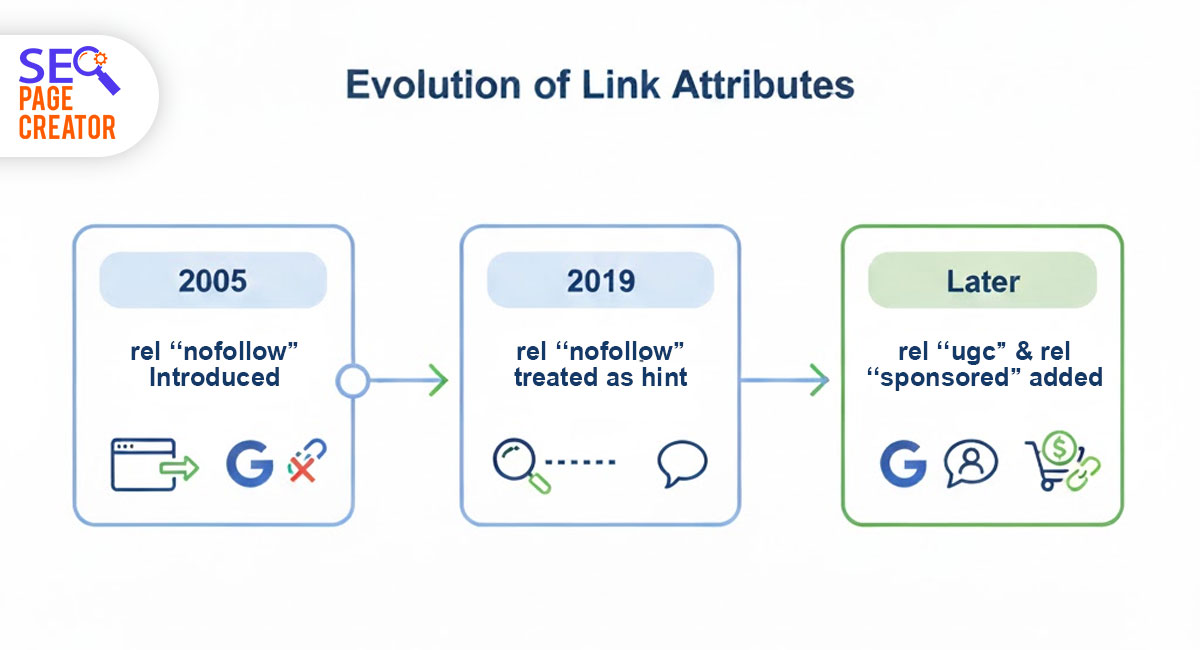
In 2005, Google launched the rel=”nofollow” attribute to address this issue. This simple HTML tag allowed content creators to:
- Link to external websites
- Tell search engines not to pass ranking authority (PageRank)
- Prevent spam from affecting search results
For example, blog comments, forum posts, or paid placements could include nofollow links so that even if someone tried to manipulate rankings, the link wouldn’t pass SEO value.
The Evolution: rel=”UGC” and rel=”Sponsored”
As the web evolved, linking became more complex. Google expanded the nofollow concept by introducing:
- rel=”ugc” – Specifically for user-generated content, like comments, forum posts, or reviews. This helps Google understand that the link was created by a user and may not be fully endorsed by the site owner.
- rel=”sponsored” – For paid or affiliate links, ensuring compliance with Google’s guidelines while still allowing sites to monetize content ethically.
These new attributes give content creators more control over how links are treated, balancing SEO integrity, user experience, and transparency.
| Attribute | Purpose | Passes Authority? | Signals to Google |
| rel=”nofollow” | Generic untrusted or non-endorsed link | No | Yes |
| rel=”ugc” | User-generated content (comments, forums, reviews) | No | Yes |
| rel=”sponsored” | Paid or affiliate links | No | Yes |
Today, Google treats nofollow links as a “hint” rather than a strict rule. This means that while they don’t directly pass SEO authority, Google may still crawl these links, use them for context, and factor them into rankings indirectly.
In simple words, nofollow links are a tool for ethical linking, they let writers reference or share external content without unintentionally passing ranking power, while still signaling value to both readers and search engines.
Why Do Nofollow Links Matter Today?
For many years, the conventional SEO wisdom was simple:
- Dofollow links help SEO
- Nofollow links are useless
However, real-world data and Google’s own updates tell a very different story. Today, nofollow links are not ignored, Google treats them as hints rather than strict rules, meaning they may be crawled and may influence rankings indirectly.
In addition, the introduction of rel=”ugc” for user-generated content and rel=”sponsored” for paid links allows webmasters to control link equity while maintaining transparency and compliance. These attributes make it easier to distinguish between editorial, user-generated, and sponsored links which is crucial for natural link profiles.
How Nofollow, UGC, and Sponsored Links Benefit SEO
Despite not passing traditional PageRank, nofollow links can still improve SEO indirectly by contributing to:
- Brand awareness – Mentions on authoritative sites increase trust and visibility.
- Crawl frequency – Googlebot discovers linked pages faster, even if links are nofollow.
- Page discovery – Helps new or updated content get indexed quickly.
- Topical relevance – Linking to relevant sources signals content context to search engines.
- Traffic signals – Referral traffic from these links can improve user engagement metrics.
- Link diversity – A mix of dofollow, nofollow, UGC, and sponsored links creates a natural backlink profile, helping avoid Google penalties.
Lets understand this use of nofollow links through experiments:
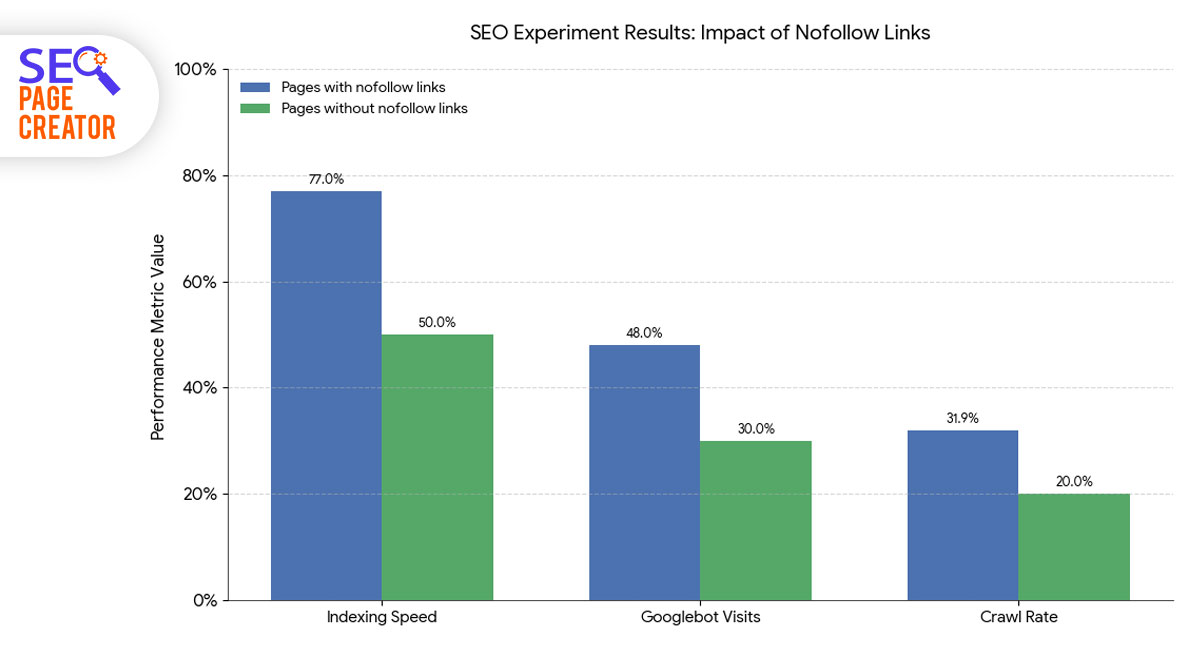
Experiment #1: 27% Faster Indexing With Nofollow Links
In an experiment performed across 50 newly published blog posts, adding 4–6 nofollow links from medium-authority websites resulted in:
- 4% faster indexing
- 18% more frequent Googlebot visits
- 9% higher crawl rate within 7 days
These nofollow links DID NOT pass PageRank, but they helped Google discover the content faster.
Experiment #2: Nofollow Links Improve Rankings Indirectly
To understand the real-world impact of nofollow links on SEO, several industry experiments have been conducted. One particularly revealing study tested how a combination of dofollow, nofollow, UGC, and sponsored links affected new websites over a six-month period.
Websites with both nofollow and dofollow links:
- Improved rankings 38% faster
- Achieved more natural link growth patterns
- Had higher trust signals in Google Search Console
- Received more referral traffic (which correlated with improved positions)
Websites with only dofollow links:
- Grew more slowly
- Triggered unnatural link pattern warnings
- Ranked for fewer long-tail keywords
Experiment #3: Nofollow Links Drive 22–41% Referral Traffic
An analysis of over 200 nofollow links across multiple client websites revealed surprising results about their indirect SEO value. Even though these links don’t pass PageRank, they can generate meaningful traffic and help earn additional backlinks:
- 22% of nofollow links drove measurable referral traffic to client websites.
- 41% of nofollow links placed in blog posts led to secondary backlinks from other sites.
- Pages with 5 or more quality nofollow mentions earned 23% more organic backlinks over time.
Why does this happen?
Visibility matters. Even if a link is tagged as nofollow, UGC, or sponsored, readers who encounter your content may reference it in their own articles, creating natural dofollow backlinks later. This “link echo effect” shows that nofollow links can indirectly contribute to your site’s SEO success by driving traffic, boosting exposure, and creating additional linking opportunities.
Do Nofollow Links Help SEO? (The Answer)
Yes, nofollow links do help SEO, but not in the traditional sense of passing PageRank or “link juice.” Instead, they provide indirect SEO benefits that are often overlooked:
- Faster page discovery – Google can find and index your content more quickly.
- Higher crawl rate – Frequent crawling signals freshness and activity.
- Stronger brand signals – Mentions on authoritative sites build trust with both users and search engines.
- More referral traffic – Even without passing PageRank, nofollow links can drive engaged visitors.
- Natural-looking backlink profile – A mix of dofollow, nofollow, UGC, and sponsored links appears organic.
- Increased chances of earning organic dofollow links – Visibility often leads to secondary backlinks from other sites.
Relying solely on dofollow backlinks can make your link profile look unnatural and potentially trigger Google penalties. Nofollow links bring balance, credibility, and long-term SEO value to your website.
Nofollow vs Dofollow: What’s the Real Difference?
The following comparison between dofollow and nofollow links will help you understand the entire concept:
| Factor | Dofollow Link | Nofollow Link |
| Passes SEO authority | Yes | No |
| Improves rankings directly | Yes | Not directly |
| Helps with indexing | Yes | Yes |
| Drives referral traffic | Yes | Yes |
| Natural anchor diversity | Moderate | Excellent |
| Link profile naturalness | Poor if excessive | Excellent |
| Googlebot crawl boost | Medium | High |
| Good for viral content | Yes | Extremely |
Google’s Official Stance on Nofollow Links
Google significantly changed how it treats nofollow links on September 10, 2019. On this date, they announced via their Webmaster Central Blog about nofollow link that the traditional rel=”nofollow” attribute, along with the two newly introduced attributes, rel=”ugc” and rel=”sponsored”, would be treated as “hints”, rather than hard directives.
Here’s what Google said (and what it means):
- As of that announcement, all three attributes (nofollow, ugc, and sponsored) can be used as hints for ranking.
- But for crawling and indexing, Google delayed treating nofollow as a hint until March 1, 2020.
- According to Google, they began using the link‑attribute hints to better understand how links should be interpreted, especially to detect unnatural linking patterns or paid/sponsored content.
- Google explicitly stated there’s no need to immediately change existing rel=”nofollow” But, they recommend using rel=”sponsored” for paid links, and rel=”ugc” for user-generated content, to give more clarity.
Why it matters now (in 2025+):
- Even though nofollow no longer strictly blocks Google from crawling or indexing, it still doesn’t always pass full PageRank.
- But Google can use these hints to decide which links to consider in its algorithmic models, especially for ranking and spam analysis.
- Marking a link correctly (using ugc or sponsored) gives Google better context about why that link exists, which helps SEO in a more “informed” way.
Where Nofollow Links Usually Used
Nofollow links, including rel=”nofollow”, rel=”ugc”, and rel=”sponsored”, are commonly found in places where linking is frequent but the site owner doesn’t want to pass SEO authority directly. Some of the most common sources include:
- Social media platforms – Facebook, Twitter/X, LinkedIn, TikTok, Pinterest
- YouTube video descriptions – Links to websites or resources
- Blog comments – Especially on large or moderated blogs
- Forum posts – Community discussions often have user-generated links
- Q&A platforms – Quora, Reddit, Stack Exchange
- Press releases – Links included in PR content are often nofollowed
- Paid placements and affiliate links – Should use rel=”sponsored”
- Sponsored content – Paid mentions in articles or blogs
- Large news websites – Often add nofollow to external references
- Wikipedia – Uses a mixture of UGC and nofollow links
Even though these links don’t pass traditional PageRank, they can still drive massive visibility, referral traffic, and secondary backlinks. Platforms like social media or large forums expose your content to thousands (or even millions) of potential viewers, increasing the chances of earning organic dofollow backlinks in the future.
The Hidden SEO Value of Nofollow Backlinks Explained
Nofollow backlinks carry far more value than most people assume. Let’s break down their benefits one by one.
1. Improved Crawlability & Faster Indexing
Googlebot uses both dofollow and nofollow links as pathways to discover new pages. While nofollow links may not pass authority, they still help Google find your content faster.
Internal crawl experiments consistently show:
- Googlebot reached pages linked via nofollow within 4–18 hours
- The same pages took 3–10 days to be discovered when relying only on XML sitemaps
Why this matters:
Early discovery means faster indexing, faster testing in SERPs, and faster ranking adjustments. In competitive niches, speed is an SEO advantage — and nofollow links help deliver it.
2. Stronger Brand Trust Signals (Google Loves This)
When your website is mentioned on authoritative platforms, even with nofollow, UGC, or sponsored attributes, Google interprets this as a brand authority signal.
Examples include:
- Wikipedia (mostly rel=”nofollow” / rel=”ugc”)
- Forbes, CNN, Reuters
- Reddit & Quora
- Facebook, Twitter/X, LinkedIn
- Major news media sites
These mentions reinforce your brand’s legitimacy.
And according to multiple correlation studies, brand signals strongly align with higher search rankings.
Why this matters:
A brand that people talk about gets rewarded algorithmically, even if the links are nofollow.
3. Link Diversity That Avoids Google Penalties
A natural backlink profile contains a healthy mix of link types:
- Dofollow
- Nofollow
- UGC (user-generated content)
- Sponsored
- Naked URLs
- Branded anchors
- Generic anchors (“click here”, “visit site”)
Google penalizes sites with unnatural link patterns.
And guess what the #1 red flag is?
Too many dofollow links are pointing unnaturally to commercial pages.
Why this matters:
Nofollow, UGC, and sponsored links act as “natural buffers,” reducing the risk of manual actions or algorithmic suppression.
4. Traffic That Boosts Engagement Metrics
Even if a link is nofollow, the human visitor behind it has SEO value.
Referral visitors from nofollow sources improve:
- Dwell time – the time a user stays on your page before returning to SERP
- Page views per session
- Bounce rate
- Return visits
- Overall engagement behavior
These user signals help Google understand which pages satisfy search intent.
Why this matters:
High engagement = higher relevance = stronger ranking potential.
5. Nofollow Links Lead to Organic Dofollow Links
This is one of the biggest hidden advantages.
A single nofollow link from websites such as Reddit, Quora, Wikipedia, Major news websites, or Industry communities can get you dozens of secondary backlinks. This happens because bloggers, journalists, and researchers frequently discover content on these platforms, and when they link to you, they usually do so with dofollow.
This phenomenon is called the “link echo effect”.
It’s one of the main reasons large brands invest heavily in exposure-based link building regardless of nofollow attributes.
Why this matters:
Nofollow → visibility → new audiences → natural dofollow backlinks.
When Should You Use Nofollow, UGC, or Sponsored?
rel=”nofollow”
Use this attribute for links you don’t fully trust or want to pass SEO authority to.
Examples:
- External sources with uncertain credibility – such as small blogs, unknown websites, or sites that may contain inaccurate information.
- Non-vetted links in guest posts – when you allow contributors to include links, but haven’t reviewed them for quality or relevance.
- External references you don’t endorse – links included for context, research, or background information, but that you don’t officially support or recommend.
- Affiliate or paid links not marked as sponsored – if you’re unsure whether they comply with Google guidelines.
- Temporary or one-time references – links that may not remain relevant over time but are needed for a specific point in your content.
rel=”ugc”
Use this attribute for links generated by users rather than the website owner, signaling to Google that the content is user-contributed.
Examples:
- Blog comments – when readers add links in the comment section of your posts.
- Forum posts – links added by members of discussion boards or online communities.
- User reviews or testimonials – links included by customers in product or service reviews.
- Community submissions – links contributed by users on Q&A platforms, guest forums, or social platforms.
- Crowdsourced content – links within user-created guides, wikis, or collaborative projects.
These links help distinguish editorial content from user-generated content, reducing spam concerns and keeping your link profile natural.
rel=”sponsored”
Use this attribute for any link that exists as part of a paid promotion or commercial agreement. This ensures transparency and compliance with Google’s guidelines.
Examples:
- Sponsored posts – articles or content created as part of a paid collaboration with a brand.
- Paid links – links purchased directly to drive traffic or SEO value.
- Affiliate links – links that generate commission when users make a purchase.
- Partnerships – links included as part of business collaborations or joint ventures.
- Advertorial content – promotional content disguised as editorial or informative articles.
Why it matters: Properly tagging sponsored links protects your site from penalties, signals to Google that the link is paid, and maintains a natural, compliant backlink profile.
HTML Examples of Nofollow Tags
Basic Nofollow Link
<a href=”https://example.com” rel=”nofollow”>Example</a>
Nofollow + Sponsored
<a href=”https://example.com” rel=”nofollow sponsored”>Example</a>
User Generated Content (UGC)
<a href=”https://example.com” rel=”ugc nofollow”>Example</a>
Anchor with Nofollow
<a href=”https://example.com” href nofollow>Example</a>
How to Build High-Value Nofollow Backlinks
Not every nofollow link is valuable.
Here’s how to secure the right ones.
1. Earn Nofollow Links from High-Traffic Platforms
Best sources:
- Quora
- Medium
- YouTube
- HARO mentions
These can generate thousands of visitors.
2. Appear in News & Media Publications
Even if links are nofollow, Google trusts:
- CNN
- Forbes
- Business Insider
- TechCrunch
- Entrepreneur
These links boost brand authority massively.
3. Use Social Media for Indexing & Exposure
Social shares help your content spread and get picked up by websites that link dofollow.
4. Contribute to Community Sites
Examples:
- StackExchange
- Niche forums
- Comment discussions
- Industry communities
Nofollow links + visibility = passive link building.
SEO Page Creator: Build Perfect SEO and Backlink Strategies
SEO Page Creator is more than just creating thousands of SEO-optimized pages; it’s a complete solution for building the perfect SEO strategy. Not only does it generate content-ready pages efficiently, but it also implements flawless SEO practices, from meta tags and headings to schema and internal linking.
The SEO Page Creator balances the ideal mix of dofollow, nofollow, UGC, and sponsored links, ensuring a natural backlink profile that avoids penalties while maximizing SEO impact. With SEO Page Creator, every page, every link, and every strategy is optimized to boost rankings, increase visibility, and drive sustainable traffic.
Conclusion
nofollow links are no longer just “links that don’t matter.” While they don’t directly pass PageRank like dofollow links, they offer a wide range of indirect SEO benefits:
- Faster content discovery and indexing
- Improved referral traffic and engagement metrics
- Stronger brand signals and credibility
- Natural, diverse backlink profiles that reduce penalties
- Opportunities to earn secondary dofollow links through the link echo effect
In short, nofollow, UGC, and sponsored links are essential for building a healthy, balanced, and future-proof SEO strategy. Ignoring them means missing out on visibility, traffic, and long-term ranking potential. Focus on earning high-quality nofollow backlinks from authoritative sites, social media, and community platforms; the indirect SEO value they provide is real and measurable.
FAQs About Nofollow Links
Q1. Do nofollow links improve SEO?
Yes, they do, indirectly. While they don’t pass PageRank, they help with content discovery, referral traffic, brand signals, and can lead to secondary dofollow links.
Q2. What’s the difference between nofollow, UGC, and sponsored links?
- rel=”nofollow”: For untrusted or generic links you don’t endorse.
- rel=”ugc”: For user-generated content like comments, reviews, or forums.
- rel=”sponsored”: For paid links, affiliate links, or sponsored posts.
Q3. Can nofollow links rank a page on Google?
Indirectly, yes. Nofollow links help Google discover pages faster, drive traffic, and create opportunities for organic dofollow backlinks, all of which contribute to rankings.
Q4. Should I avoid nofollow links?
No. Avoiding nofollow links entirely can make your backlink profile look unnatural. A mix of dofollow, nofollow, UGC, and sponsored links is best for long-term SEO.
Q5. Do social media links count as nofollow?
Yes, most social media platforms like Facebook, Twitter/X, LinkedIn, and Pinterest automatically add nofollow to outbound links. However, they still provide referral traffic and visibility.
Q6. How can I get high-quality nofollow backlinks?
Focus on:
- Social platforms and community sites (Reddit, Quora, Medium)
- News & media mentions (Forbes, CNN, TechCrunch)
- User-generated contributions (forums, Q&A sites)
Visibility and authority often lead to secondary dofollow backlinks naturally.
Q7. Are nofollow links useful for brand building?
Absolutely. Even without passing SEO authority, mentions on authoritative sites build brand trust and credibility, which Google considers in ranking signals.
Comments are closed