
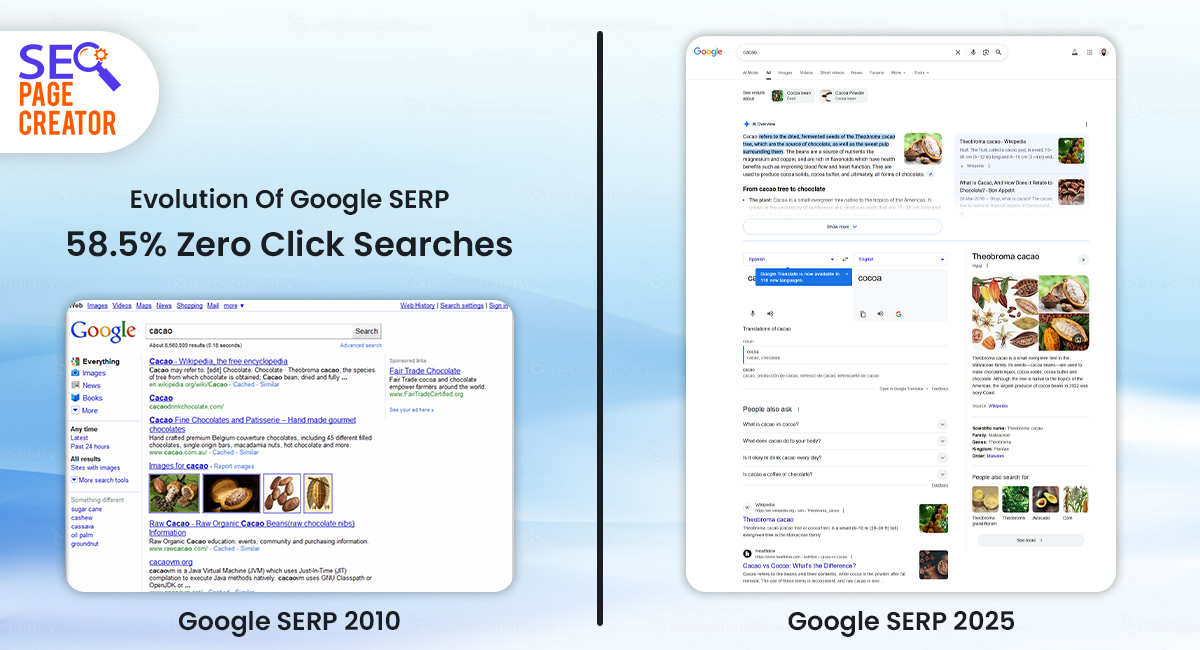
“Is SEO Dead” is one of the most debated topics in digital marketing today. Imagine this: more than half of Google searches now end without a single click. The recent study showed that 58.5% of U.S. Google searches ended without a user visiting any website, which is a dramatic shift from the old days of “10 blue links” which means SERP consisting of 10 results.
This isn’t just a blip. With the rise of AI-powered summaries, knowledge panels, and featured snippets, the search experience is changing fast. Some say SEO is dead, but those cries are premature. SEO isn’t dying, SEO is evolving. To understand why, we need to walk through what SEO is, why it’s still important, and how it’s adapting to this new era.
Let’s understand…
What Is SEO — And Why It Matters So Much?
At its core, Search Engine Optimization (SEO) is about making your website understandable, relevant, and trustworthy to search engines, and more useful to people. SEO covers on-page tactics (like keyword-rich content and headings), technical work (site speed, mobile-friendliness, structured data), and off-page signals (backlinks, domain authority).
SEO is meant for two big things:
- Getting found in search: When your site is properly optimized, it earns higher rankings, making it far more likely for people to discover your business on search engine results pages, especially on Google.
- Quality control: Sites without SEO often felt disorganized or had terrible content. Without someone thinking about structure, titles, and backlinks, the web would be a mess, some sites would be hard to find, others redundant, and many just poorly built.
SEO doesn’t just impact rankings; it ensures that websites are structured, clear, and understandable for both search engines and users. Without proper SEO, the web could be chaotic, with confusing layouts, missing content, and pages that fail to meet user expectations.
In today’s AI-driven and multi-platform environment, SEO continues to act as the bridge between human intent and machine understanding, keeping the internet navigable, reliable, and user-friendly.
Why SEO Still Matters?
Many believe SEO is dying because traditional clicks are decreasing, but that’s only part of the story. In reality, SEO matters now more than ever because it provides the structure, clarity, and authority that both Google and AI systems rely on to understand and evaluate content.
1. SEO Builds Structure & Clarity for Users, Search Engines, and AI
Modern search engines need clear signals to interpret what your website is about. SEO ensures that your content is machine-readable, well-organized, user-friendly, and contextually understandable.
- Well-structured content (headings, schema markup, internal links) helps Google and AI understand your page hierarchy and content priorities.
- Without SEO, websites become chaotic, missing pages, duplicate content, confusing navigation, and poor UX.
- Even though Google doesn’t use metrics like bounce rate directly, it does measure overall satisfaction through interaction patterns, such as long clicks and reduced pogo-sticking.
In short, SEO is the system that allows Google and AI to correctly interpret your content and match it to user intent.
2. SEO Builds Trust, Authority & Credibility
High-quality, optimized content helps you earn trust, not just from Google, but from generative AI systems, which increasingly surface authoritative sources.
- Backlinks still matter, but only when they come from relevant, reputable sources (quality > quantity).
- SEO demonstrates your Expertise, Experience, Authority, and Trust (E-E-A-T), which Google uses to evaluate reliability.
- When your SEO is strong, you increase your chances of being used in Featured Snippets, Knowledge Panels, AI Overviews, and even LLM-generated answers.
Authority is the new ranking factor, and SEO is how you build it.
3. SEO Provides Long-Term, Sustainable Growth
SEO remains the most cost-effective digital channel because it continues to work long after the initial investment.
- A well-optimized article can rank (and drive visibility) for years.
- Technical SEO keeps your website fast, mobile-friendly, secure, and crawlable as it grows.
- Even if a search results in zero clicks, your brand still gains impressions, trust, and future recognition.
SEO isn’t just about clicks anymore; it’s about long-term visibility and authority.
4. SEO Future-Proofs Your Content for AI & Generative Search
AI is transforming search behavior, but it still depends on SEO-optimized content to generate accurate answers.
- Structured data, clear formatting, and Q&A-style content help AI models analyze, understand, and cite your site.
- Appearing in AI Overviews or LLM responses increases your visibility, even when users don’t click.
- SEO ensures your brand becomes one of the sources AI systems prefer, not because of luck, but because your content is structured and trustworthy.
This ties directly into Everywhere Optimization, where search engines, social platforms, and AI assistants pull content signals from websites, YouTube, Instagram, TikTok, LinkedIn, and more.
SEO makes you discoverable wherever AI — and users — are looking.
Is Google Trying to Kill SEO?
A popular misconception today is that Google is deliberately trying to eliminate SEO, especially with the rise of AI summaries, Featured Snippets, People Also Ask boxes, Knowledge Panels, and other zero-click SERP features. Many believe that since Google gives users answers instantly, there’s “no need” for ranking websites anymore.
But this assumption is incorrect.
In reality, Google is not trying to kill SEO; it’s trying to improve the search experience.
And SEO evolves in response.
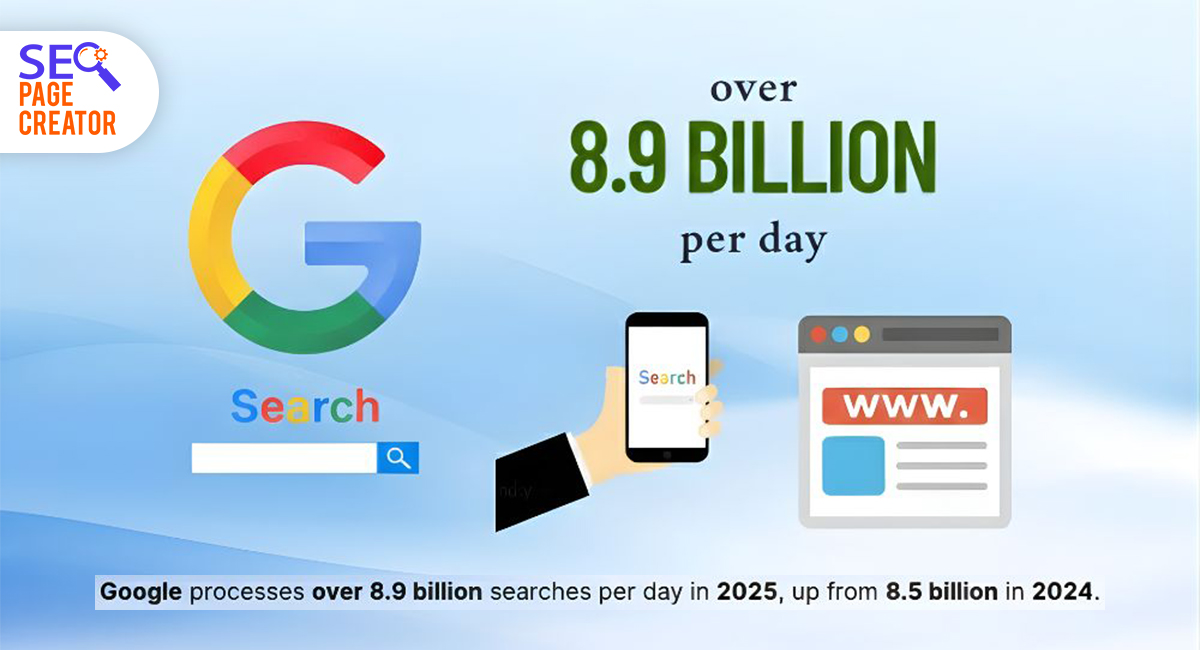
For more than 25 years, SEO has been essential to how the internet works, and it’s not disappearing. Instead, Google’s newest features, including AI Overviews, reshape how people interact with search results. They reduce unnecessary clicks, provide faster answers, and guide users toward high-quality information. Plus, people are still using Google more than ever, over 8.9 billion searches are performed every single day.
But here’s the truth:
AI summaries and zero-click results still depend entirely on SEO-optimized content.
Google cannot generate AI answers out of thin air. It extracts information from:
- Authoritative websites
- Well-optimized articles
- Structured pages with schema
- Clear, trustworthy sources
If your site is not optimized, Google will not use your content in snippets, summaries, or citations, meaning you lose visibility, even if users don’t click.
Additionally, Google’s algorithm updates, including core updates, continue to prioritize:
- Page speed and performance
- Mobile-friendliness
- Helpful, high-quality content
- Strong user satisfaction signals
- Topical authority and expertise
These are all SEO principles.
Far from killing SEO, Google’s updates refine the rules and push the industry toward better content, clearer structure, improved UX, and higher authority.
So if you’re still asking, “Do I even need SEO anymore?”
The answer is an absolute YES now more than ever.
At SEO Page Creator, we view Google’s continuous enhancements as the new benchmark for SEO excellence. Every update encourages businesses and SEO professionals to align with Google’s mission:
deliver the most accurate, relevant, trustworthy information to users, fast.
Google isn’t eliminating SEO.
Google is reshaping SEO.
And rewarding those who adapt.
What’s Driving the “Is SEO Dead?” Conversation
The debate around SEO’s relevance has intensified over the last few years. Many ask if SEO is losing value due to AI Overviews, zero-click searches, and rich SERP features. To understand why, we need to look at how Google’s search engine results pages (SERPs) have evolved over time.
Let’s go through the major updates that shaped the SERP:
| Year | SERP Feature / Update | Impact on SEO & Search Behavior |
| 1998 | Google Launch – 10 Blue Links | Simple text links, ranked by PageRank; SEO focused on keywords and backlinks. |
| 2001 | Google Toolbar + PageRank Visibility | Link-building becomes mainstream; PageRank informs SEO strategy. |
| 2003 | Florida Update | Algorithm crackdown on keyword stuffing; modern SEO rules emerge. |
| 2005 | Universal Search | Blended results: images, videos, news, and maps start appearing alongside organic links. |
| 2008 | Autocomplete / Suggest | Query predictions guide search behavior; keyword research evolves. |
| 2010 | Google Places / Local Pack | Local SEO gains importance; local business visibility improves. |
| 2012 | Knowledge Graph | Entity-based results appear; knowledge panels reduce reliance on organic clicks. |
| 2014 | Featured Snippets | “Position zero” answers appear; rise of zero-click searches begins. |
| 2015 | RankBrain (AI Integration) | Machine learning improves understanding of search intent; keyword exact match less important. |
| 2018 | Mobile-First Indexing | Mobile optimization becomes mandatory; SEO adapts for responsive design. |
| 2019 | BERT Update | Google interprets natural language queries more accurately; search becomes conversational. |
| 2020 | Passage Indexing | Specific passages in long content can rank; long-form content visibility improves. |
| 2021 | Core Web Vitals | Page speed, stability, and responsiveness become ranking factors; UX officially matters. |
| 2023 | Helpful Content & Spam Updates | Focus shifts to high-quality, useful content; low-value or AI-generated content penalized. |
| 2024 | AI Overviews / SGE | AI-generated summaries appear at the top; zero-click searches increase; CTR for top organic results drops. |
| 2025 | Multi-Platform, AI-Driven Search | SEO expands to “Everywhere Optimization”; structured content, brand authority, and multi-platform presence are critical. |
From the table above, we can see how SERPs transformed from simple 10 blue links to AI-powered, multi-answer ecosystems. These changes drove several key trends:
1. The Explosion of Zero-Click Searches
- In recent research mentioned by Search Engine Land, nearly 60% of Google searches end without clicking through to a website.
- On mobile, this trend is even more pronounced, as users increasingly rely on snippets, knowledge panels, and AI Overviews.
- These “zero-click” moments force marketers to rethink SEO, it’s not enough to rank, you must aim to be part of the answer, not just a destination.
2. AI Overviews and Generative Search
- According to the Boston Institute of Analytics, Google’s AI Overviews (or “AI summaries”) are becoming more common, delivering synthesized responses on the SERP itself.
- When AI Overviews appear, traditional click-through rates (CTR) drop sharply. According to some reports, first-position CTR can fall by ~34.5% when these summaries are present.
- As AI systems get smarter, they may rely more on well-structured, authoritative content, and that content will need SEO to be visible and usable.
3. Changing Search Intent & Behavior
- Search behavior is shifting: instead of typing short keywords, people now ask full questions (“how to fix a leaking faucet”), use voice search, or rely on AI to handle multi-step queries.
- Google’s SERP is richer now: “People Also Ask” (PAA), featured snippets, calculators, and interactive tools mean users often stay on the SERP.
- With these tools, the search engine results page becomes the destination, not just a gateway.
4. The Short Attention Span & Demand for Speed
- In today’s fast-paced world, users want instant gratification. If Google gives the answer right away, many users won’t bother to click.
- Data suggests that mobile users, especially, abandon long click journeys. According to SEO Sandwich, zero-click rates on mobile were as high as 65% in recent data. SEO Sandwitch
- For many queries (calculations, definitions, simple facts), Google’s own on-page tools (like a calculator) satisfy users immediately.
Why Google SEO Is Evolving in an AI-Driven World
The world of search is evolving faster than ever. With AI, large language models (LLMs), and generative technologies advancing at a revolutionary pace, research and innovation are happening globally. Google alone cannot control all these developments, the search landscape is influenced by user behavior, emerging technologies, and innovations outside its direct control.
As a result, Google must constantly adapt its systems to keep up with evolving search patterns and maintain its dominance. This is why SEO is not dying, it is evolving. The way people search, the platforms they use, and the technologies they interact with are all advancing. SEO strategies must adapt to ensure content remains visible, authoritative, and trusted.
If Google fails to stay ahead of these innovations, alternative search engines or AI-powered platforms could emerge as serious competitors, potentially disrupting its mainstream dominance within the next decade. Therefore, modern SEO is no longer just about ranking on Google, it’s about adapting to a rapidly changing ecosystem where technology, user behavior, and innovation drive visibility and relevance.
Are AI and LLMs the Enemy of SEO or Its Greatest Ally?
With AI, large language models (LLMs), and generative technologies advancing quickly in 2025, SEO is shifting, and businesses must adapt to remain visible.
- According to a study, about 58% of Google searches now end without a click, largely because AI Overviews supply instant answers.
- This trend has led to the rise of Generative Engine Optimization (GEO), a strategy focused on creating highly structured, authoritative content that LLMs (like ChatGPT, Google’s Gemini, or Perplexity) can use to generate answers.
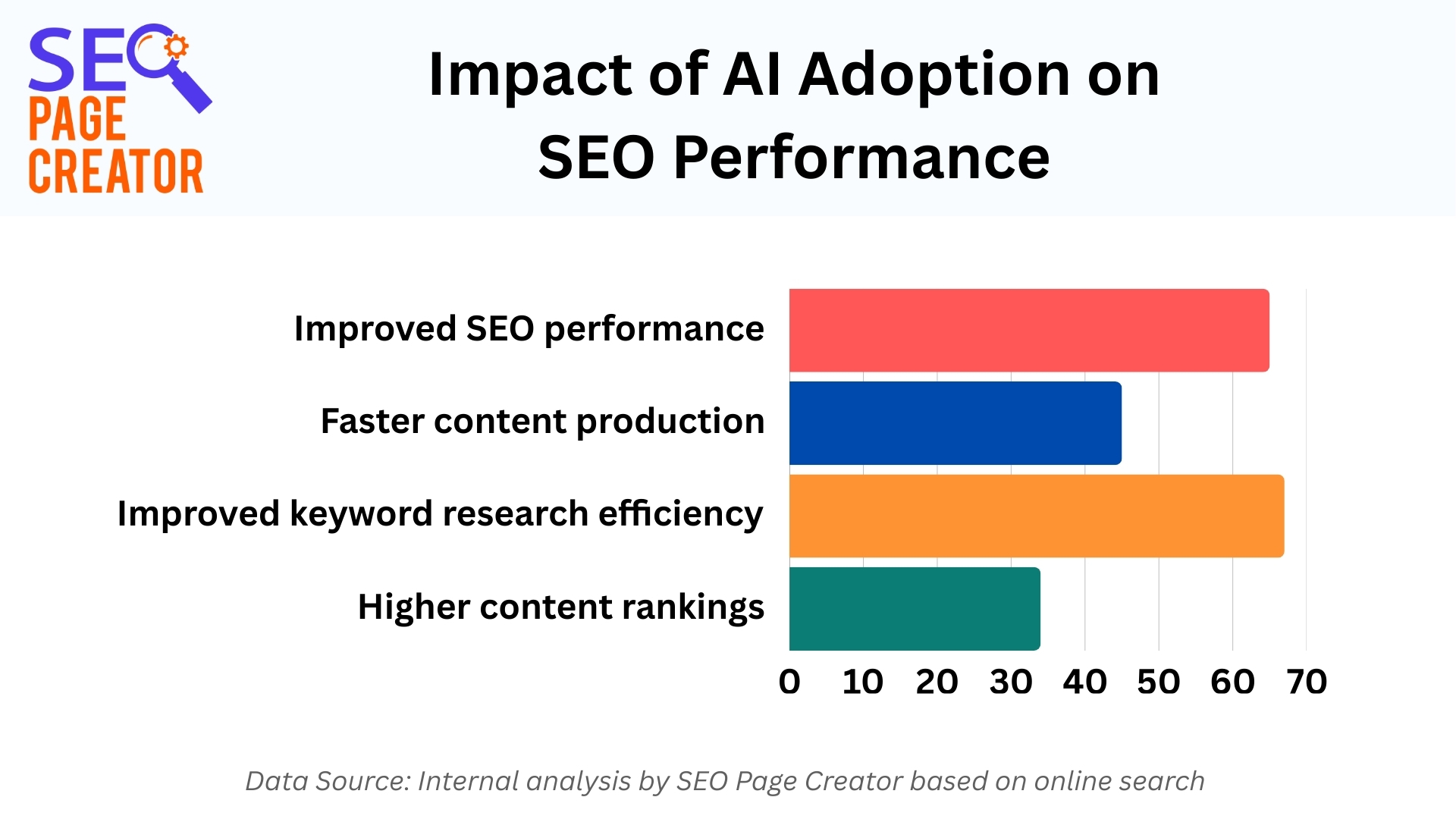
- 65% of businesses saw measurable SEO performance gains after adopting AI-powered SEO tools.
Why isn’t AI killing SEO? Because AI systems rely heavily on web content. Well-optimized, structured pages are more likely to be cited in AI-generated summaries or conversations. In fact, an academic paper on GEO shows that AI prefers content from credible, third-party sources meaning quality still matters.
And yes, many SEOs are already using AI intelligently: They use AI for content ideation, research, and optimization, but still rely on human judgment for strategy and quality control.
Everywhere Optimization: SEO Beyond Google
In 2026, modern SEO doesn’t only mean being discoverable on Google. A growing number of people now get their answers, or at least start their search, on social media platforms and AI-powered tools.
- Many consumers now use generative AI instead of Google for product discovery.
- For many businesses, social platforms like YouTube, TikTok, Instagram, and even Facebook are now search gateways for Gen Z and younger users, a huge shift from earlier years when search was mostly done on search engines.
- Generative AI (like ChatGPT or Gemini) often synthesizes data from websites, social media, and video platforms, which means your content needs to be visible and structured across all these channels, not just on your website.
Everywhere Optimization means designing your SEO strategy so your content is not just Google-friendly but also AI-friendly, social media-friendly, and video search-friendly. It ensures your brand is citable and authoritative, whether users search on YouTube, Instagram, or via AI chatbots. Creating structured, trustworthy content that can be understood by both machines and humans across all platforms drives leads, traffic, and brand awareness in an increasingly AI-first world.
Key Differences Between Traditional and Modern SEO
To better understand how SEO has evolved, it helps to compare the two approaches side by side. Traditional SEO focused on ranking within the classic “10 blue links,” prioritizing keywords, backlinks, and basic on-page optimization. Modern SEO, however, is broader and more dynamic, encompassing featured snippets, AI-generated answers, and visibility across multiple platforms.
The following table highlights the major differences between traditional SEO and modern SEO, showing how strategies, metrics, and goals have expanded over time.
| Feature / Focus | Traditional SEO | Modern SEO |
| Primary Goal | Rank in the top 10 blue links | Rank across SERP features, AI answers, and multiple platforms |
| SERP Layout | 10 blue links | Featured snippets, People Also Ask, knowledge panels, videos, and AI-generated answers |
| Content Optimization | Keyword-heavy, meta tags, on-page SEO | Structured content for AEO/GEO, AI-friendly, E-A-T focused |
| Traffic Focus | Click-throughs from organic search | Clicks + visibility, citations, AI impressions, multi-platform engagement |
| Backlinks | Crucial for authority | Still important, but content quality & structured data increasingly matter |
| Metrics | Rank position, clicks | Visibility in snippets/answer boxes, AI citations, engagement, brand authority |
| User Experience | Minimal focus | High focus on page speed, mobile usability, and engagement metrics |
The Present and Near Future of SEO (2026)
SEO isn’t dying, it’s transforming. As AI reshapes how users search, businesses must evolve their strategies to stay visible across search engines, AI assistants, and social platforms. Here’s how SEO is shifting today:
1. Answer Engine Optimization (AEO)
Search is moving beyond blue links. AEO focuses on winning AI summaries, answer boxes, featured snippets, and knowledge panels by providing clear, intent-driven answers.
2. Generative Engine Optimization (GEO)
Content must be structured so AI systems can parse, understand, and cite it. Schema markup, FAQs, HowTo formats, and entity-rich content help AI models accurately pull information from your website.
3. Brand & Trust-Centric SEO
Google and AI systems increasingly prioritize reliable, authoritative sources. Brand reputation, E-E-A-T, and digital trust signals now influence visibility more than ever.
4. Hybrid Metrics & KPIs
Clicks alone no longer represent true visibility. Modern SEO requires tracking:
- Impressions in AI answer boxes
- Citation frequency in AI-generated summaries
- Brand mentions across platforms
- Engagement and assisted conversions
5. Cross-Platform Search Optimization
Users search via Google, YouTube, voice assistants, AI chatbots, and social search. Content must be flexible, structured, conversational, and optimized for multi-step user journeys.
Predicting SEO’s Path Over the Next 5 Years
As AI continues to transform how people search, the SEO ecosystem will evolve dramatically. The scenarios below illustrate the possible future, from search fragmentation to AI-driven tools that reshape keyword research, optimization, and content strategy.
| Scenario | What SEO Looks Like |
| Best-Case (Evolution) | SEO specialists become strategic content architects. AI systems frequently cite high-quality web pages in summaries, enhancing brand visibility even when clicks decline. SEO expands beyond ranking to optimizing for human readability, AI comprehension, and multi-platform visibility. |
| Brand-First SEO | Brands with strong digital authority dominate search and AI-generated answers. As AI prioritizes trustworthy sources, reputable brands gain a major visibility advantage across Google, social search, and AI chatbots, creating an even stronger “authority gap.” |
| Fragmented Search Landscape | Search splits into multiple ecosystems: Google Search, YouTube Search, TikTok Search, voice assistants, and AI agents like ChatGPT and Gemini. SEO becomes specialized, with roles like Voice SEO, AI-Trust SEO, and Platform-Specific SEO emerging as formal skill sets. |
| Rise of AI-Powered SEO Tools | New tools begin replacing traditional keyword research. Platforms like ChatGPT, Gemini, and Claude start offering AI Keyword Planners, showing real-time search patterns, audience questions, and intent clusters across web, social media, and video platforms. AI tools provide predictive keyword trends, content gap analysis, and “future search demand” forecasting. This reshapes how SEOs plan content calendars and optimize websites. |
| Risk of Complacency | Businesses that fail to optimize for AI-first search risk disappearing from AI answers entirely. As answer engines replace many traditional search pathways, brands without structured, authoritative, AI-readable content face rapid visibility decline. Competitors who adopt AI-driven SEO gain lasting, compounding advantages. |
Practical Tips to Stay Ahead in the AI-Driven SEO Era
To future-proof your strategy:
1. Focus on Structure
- Implement schema markup (FAQ, HowTo, Article)
- Answer specific user questions clearly
- Use logical hierarchy (H1–H3), internal links, and clean formatting
2. Optimize for AI and Answer Engines
- Track performance in AI Overviews and People Also Ask
- Create content that speaks directly to user intent
- Support claims with data so AI trusts your content
3. Build Brand Authority
- Produce expert-level content
- Earn backlinks from reputable sources
- Strengthen E-E-A-T across your site and author profiles
4. Expand Your Metrics
- Monitor AI citations, impressions, brand mentions
- Use tools that support AI-search reporting (as they emerge)
5. Leverage AI Wisely
- Use AI for ideation, outlines, optimization
- Always refine and humanize AI-generated content
- Align AI usage with your SEO strategy, not as a replacement
Final Verdict from SEO Page Creator: Is SEO Dead?
SEO is far from dead; it’s evolving. The rise of AI, zero-click searches, and rich SERPs is changing how SEO works, not if it works. Businesses that adapt by optimizing for AI, social platforms, and structured content will thrive. The core goal of SEO, matching content to user intent, remains critical, while visibility, authority, and trust have become the new key metrics of success.
Here’s the bottom line:
- SEO still matters because it provides structure, clarity, and authority to your content, enabling both Google and AI systems to understand and trust your site.
- Zero-click searches, AI Overviews, and enhanced SERP features don’t kill SEO; they reframe it, creating new opportunities for visibility.
- SEOs who embrace this new reality, optimizing for AI, tracking modern metrics, and building brand credibility, won’t just survive; they will thrive.
- Rather than dying, SEO is transforming into a more strategic, high-level practice that is deeply intertwined with modern search technology and multi-platform optimization.
At SEO Page Creator, we help businesses adapt to this evolving landscape, ensuring your content is optimized for search engines, AI, and social media alike.
Ready to future-proof your SEO strategy? Let SEO Page Creator guide your business to maximum visibility and authority in 2026 and beyond.
FAQs: SEO in 2026 and Beyond
1. Is SEO dead because of AI?
No. AI depends on structured, high-quality content to provide answers. SEO ensures your content is organized, authoritative, and discoverable, making it more likely to be cited by AI models and visible in search results.
2. What is Everywhere Optimization?
Everywhere Optimization means optimizing content beyond Google. It ensures your content is discoverable, structured, and authoritative across all platforms, including social media, video platforms, voice assistants, and AI-driven tools to reach audiences wherever they search.
3. Does Google want to eliminate SEO?
No. Google continually updates its algorithms to enhance user experience. SEO evolves alongside these updates, helping websites remain structured, credible, and relevant. Google’s goal is to reward well-optimized, user-friendly content, not to eliminate SEO.
4. Are zero-click searches killing SEO?
No. Zero-click searches mean users find answers on the SERP itself, but SEO still builds visibility, authority, and brand recognition. Optimized content can appear in snippets, panels, and AI citations, maintaining strategic impact.
5. What skills are required for SEO today?
Modern SEO requires a combination of technical skills, content strategy, AI optimization knowledge, analytics expertise, UX understanding, and brand authority management. SEOs must adapt to multi-platform visibility and evolving AI-driven search systems.
6. How has SEO changed in the last 10 years?
SEO has shifted from execution-heavy tasks like link-building and meta tags to strategic, high-level work. Today, focus is on structured content, authority, AI optimization, cross-platform visibility, and measurable user engagement metrics.
7. What is the future of SEO?
The future of SEO emphasizes visibility, authority, structured content, and AI citations. SEO will integrate with multiple search engines, social platforms, and generative AI systems, creating a multi-channel, strategic approach to content optimization.
Comments are closed